Walter Payton Grad’s Research Finds ‘Adequate’ But Not ‘Equitable’ World wide web Accessibility At 6 CPS Educational institutions
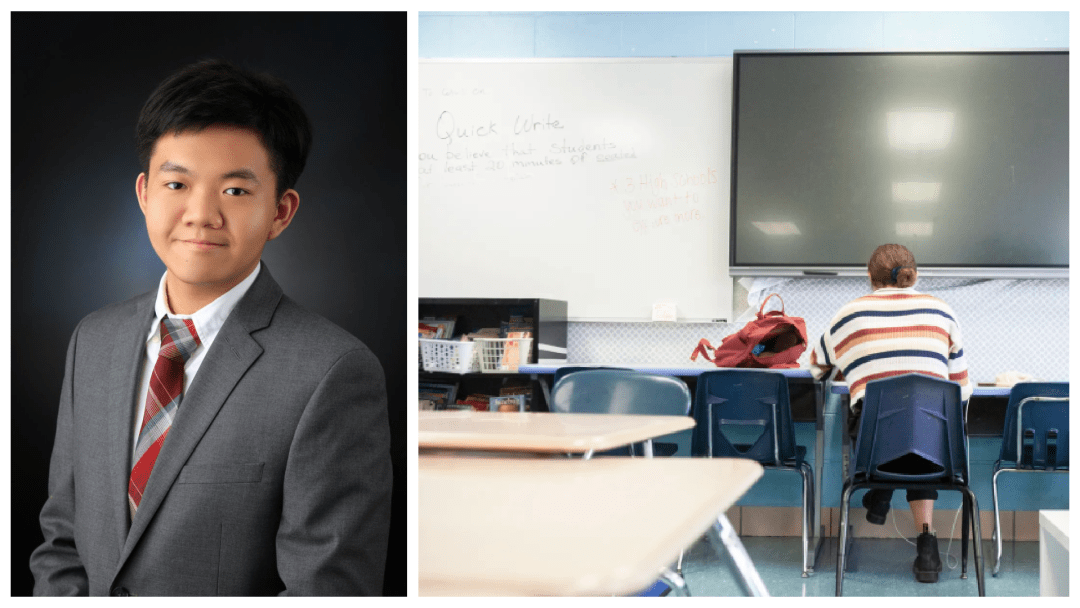
HYDE PARK — A study of internet speeds at Chicago Community Schools led by an incoming College of Chicago student could established the phase for even further investigation into equitable world wide web access within just the district.
Chris Deng, a 2023 Walter Payton College Prep graduate, examined web speeds at 6 significant colleges on the West Aspect, North Side and central town. The analyze identified internet access is “adequate” and “equal” throughout the studied educational facilities — even though not automatically “equitable.”
Just about every faculty studied achieved a federal limited-term target to offer speeds of 100 kilobits per 2nd for each individual particular person at the faculty. By 2019, practically all educational facilities nationwide experienced satisfied this intention, described as a “low bar” by the Brookings Institute.
The benefits suggest that educational facilities analyzed “currently have adequate world wide web for protecting university features and for accessing online instructional resources,” according to Deng’s research.
But only 13 p.c of exams run at the educational facilities fulfilled the federal long-expression benchmark, which is 1 megabit per next for every single individual in the college. None of the assessments achieved a countrywide tech directors association’s objective for huge districts like Chicago Public Colleges, which is 1.4 megabits for each 2nd for every person.
The 6 analyzed faculties all usually noticed “high” uncooked web speeds, but those people speeds do not account for distinctions in college sizes, in accordance to the review. Folks throughout the 6 educational institutions did not see similar speeds, the report reads.
“The objective is for CPS educational facilities to access people extensive-time period targets, but it may possibly also be worth generating equity all over schools due to the fact the larger schools, in concept, will need additional net speed,” Deng informed Block Club.
To read the full analyze, simply click listed here.
 Credit score: Jamie Nesbitt Golden/Block Club Chicago
Deng concluded the examine as element of his State-of-the-art Placement seminar and study capstone. Nick Feamster, a College of Chicago laptop or computer science professor and researcher into Chicago’s “digital divides,” assisted and mentored Deng throughout the review.
“With the Collegiate Students System … I received to go to UChicago all through the summer and attend university courses taught by college professors,” Deng stated. “When [Feamster] supplied me the option to do higher education-stage investigation with him, it was an opportunity to find out much more about what that process is like.”
As Deng acquired about net obtain at schools as a result of the scholars program, he observed “there wasn’t a lot of study finished in this discipline,” he stated.
“In terms of metrics, internet velocity was ordinarily the only element that was talked about,” Deng explained. “I also realized world wide web literacy is significant to create — you need it to locate careers, entry fiscal solutions and wellness care means that are online.
“It led me to the concern: To what extent is Chicago Public Schools’ significant college internet equitable and equal?” he claimed.
To district officials’ awareness, Deng’s analysis is the to start with outside analyze of internet speeds at Chicago General public Educational facilities, spokesperson Sylvia Barragan mentioned.
The district is fully commited to upgrading all Chicago general public universities with new connections that includes speeds of 20 gigabits per second, which is predicted to exceed the tech directors association’s goals, Barragan stated.
District officials also keep track of how students and employees use their schools’ world-wide-web and boost schools’ bandwidth as necessary, she claimed.
The sample sizing “is far too small to make definitive conclusions” about world wide web fairness throughout the district, Barragan said — which Deng observed in the review. But it presents district officers a prospect for “further evaluation and insights,” Barragan mentioned.
The study was limited by the handful of responses Deng gained from university directors, to whom he contacted by e-mail. No South Aspect faculties responded to his requests, he mentioned.
Deng explained to Block Club he’d “definitely” like to see continued investigation into web obtain, significantly at South Aspect universities.
 Credit: Colin Boyle/Block Club Chicago
For now, any additional study on district world-wide-web speeds will most likely be taken up by other individuals. Deng is established to begin his initially calendar year at UChicago quickly, exactly where he wishes to examine computer science and molecular engineering, and he has no quick ideas to increase on his investigate into the district’s internet capabilities.
“I’m even now intrigued in learning extra about how laptop or computer science and policymaking intersect,” Deng explained, this kind of as how policymakers can avoid discrimination in synthetic intelligence units.
“It will be appealing learning how to use computer science to greater people’s lives and how research is performed with that at UChicago,” he mentioned.
Deng hopes his first-of-its-variety report will inspire long term reports on the topic — and he provided some information for new threads to explore.
“If there was much more time, it would have been fantastic to function with CPS more closely to get all-around firewall difficulties [that prevented studying] latency and whether packet reduction existed, which is also significant for judging one’s encounter of the internet,” Deng claimed.
“Also, this study only looked at a quantitative method. You could mail out surveys to check out in with [how] learners and lecturers would fee their world wide web,” he stated. “Even if they have the exact world-wide-web speeds [as larger schools], would a lesser faculty price online better?”
Watch our “On The Block” Television set exhibit on The U, CW26 and MeTV.
Hear to “It’s All Excellent: A Block Club Chicago Podcast”: